
 E-submission
 KOTA
KOTA TOTA
TOTA TOTS
TOTS
Articles
- Page Path
- HOME > > Ahead-of print articles > Article
-
Case Report
- Same-site recurrence of an incomplete atypical femoral fracture 8 years after prophylactic intramedullary nailing following bisphosphonate re-exposure in an 81-year-old woman in Korea: a case report
- Youngho Cho, Changhun Lim
-
DOI: https://doi.org/10.12671/jmt.2026.00227
Published online: September 21, 2026
Department of Orthopedic Surgery, Daegu Fatima Hospital, Daegu, Korea
- Correspondence to: Youngho Cho Department of Orthopedic Surgery, Daegu Fatima Hospital, 99 Ayang-ro, Dong-gu, Daegu 41199, Korea Tel: +82-53-940-7320 Email: femur1973@gmail.com
• Received: May 31, 2026 • Revised: July 1, 2026 • Accepted: July 1, 2026
© 2026 The Korean Orthopaedic Trauma Association
This is an Open Access article distributed under the terms of the Creative Commons Attribution Non-Commercial License (http://creativecommons.org/licenses/by-nc/4.0/) which permits unrestricted noncommercial use, distribution, and reproduction in any medium, provided the original work is properly cited.
- 38 Views
- 1 Download


Abstract
-
An 81-year-old woman with osteoporosis presented in April 2024 with recurrent right thigh pain, 8 years after prophylactic intramedullary nailing for an incomplete atypical femoral fracture (AFF) in February 2016. She had a history of bisphosphonate use for approximately 10 years followed by a 5-year drug holiday and three ibandronate infusions before the index fracture in 2016; after a subsequent 4-year antiresorptive-free interval, bisphosphonate therapy was resumed in 2020–2021 following a new vertebral compression fracture. Plain radiographs in 2024 showed recurrent lateral cortical thickening and a transverse radiolucent line at the same site as the previous lesion, with intact hardware. Bone scintigraphy confirmed intense uptake consistent with a recurrent stress reaction. Laboratory testing showed markedly suppressed bone turnover markers, with a serum β-isomerized C-terminal telopeptide of type I collagen (β-CTX) level of 0.048 ng/mL, below the lower limit of the reference range (0.112 ng/mL). The lesion healed during conservative management consisting of bisphosphonate discontinuation, calcium and vitamin D supplementation, retained mechanical stabilization, and a 4-month course of off-label teriparatide. The independent contribution of teriparatide cannot be determined from this single case. This case highlights the rare phenomenon of same-site incomplete AFF recurrence long after prophylactic fixation in association with bisphosphonate resumption and describes successful conservative healing with short-term teriparatide in the presence of preexisting hardware.Level of evidence: V.
Introduction
Atypical femoral fractures (AFFs) are stress fractures associated with long-term antiresorptive therapy, particularly bisphosphonates (BPs), and are characterized by specific radiographic features as defined by the American Society for Bone and Mineral Research (ASBMR) task force [1,2]. For incomplete AFFs, standard management includes immediate discontinuation of the antiresorptive agent, optimization of calcium and vitamin D intake, and activity modification with restricted weight-bearing [1]. In symptomatic or progressing cases, prophylactic intramedullary nailing is recommended and achieves high union rates approaching 97%–100%, with mean healing times of approximately 14 weeks [3]. Teriparatide has been used off-label as an adjunct to promote healing in both conservatively managed incomplete AFFs and postoperatively, with evidence suggesting acceleration of union in selected cases [4-7].
In one imaging cohort of 124 patients with AFF, bilateral involvement was observed in 62.9%; among these patients with bilateral AFFs, the mean interval between diagnoses was 10.3 months, and 76.9% of contralateral AFFs were diagnosed within 12 months [8]. Same-site recurrence or progression after prophylactic fixation is exceptionally rare, with only isolated reports in the literature [9,10].
We report a rare case of same-site recurrence of an incomplete AFF 8 years after prophylactic intramedullary nailing, which had resulted in complete radiographic healing. The recurrence was temporally associated with resumption of BP therapy and was successfully managed conservatively with short-term teriparatide in the presence of preexisting intact hardware.
Case report
This case report was approved by the Institutional Review Board (IRB) of Daegu Fatima Hospital (IRB No. DFH 2026-02-003) and conducted in accordance with the Declaration of Helsinki. The requirement for informed consent, including consent for publication, was waived by the IRB. All patient data and images were fully anonymized.
An 81-year-old woman with osteoporosis had been treated with daily oral alendronate for approximately 10 years (2000–2010), followed by a drug holiday of approximately 5 years (2010–2015). After the drug holiday, she received three intravenous injections of ibandronate (3 mg every 3 months) between 2015 and early 2016. In February 2016, she presented with insidious right thigh pain accompanied by mild limping, without any history of trauma. Plain radiographs revealed localized periosteal and endosteal thickening of the lateral cortex at the mid-diaphyseal region of the right femur, along with a subtle transverse radiolucent line confined to the lateral cortex, fulfilling the ASBMR major criteria for an incomplete AFF [1,2] (Fig. 1A). Prophylactic intramedullary nailing was subsequently performed using a cannulated femoral nail with a spiral blade (Synthes) to prevent progression to a complete fracture (Fig. 1B). Follow-up radiographs obtained in 2021 demonstrated complete resolution of the previous cortical thickening, with restoration of normal bone contour and remodeling around the intact implant (Fig. 1C). At that time, the patient was asymptomatic and had no limitations in walking or daily activities. No antiresorptive agent was administered between the index AFF in February 2016 and the zoledronic acid infusion in May 2020, an antiresorptive-free interval of approximately 4 years.
In May 2020, she sustained a fall resulting in a new L2 vertebral compression fracture; magnetic resonance imaging at that time also revealed multiple preexisting vertebral compression fractures. Given the very high short-term fracture risk associated with multiple vertebral compression fractures, the risk-benefit assessment at that time favored resumption of antiresorptive therapy despite the prior AFF. She was managed conservatively for the L2 fracture and received a single infusion of zoledronic acid. Approximately 1 year later (2021), intravenous ibandronate (3 mg every 3 months) was resumed for continued osteoporosis and vertebral fracture management and was continued until her presentation in April 2024. The complete timeline of antiresorptive therapy, teriparatide treatment, and related clinical events is summarized in Table 1.
In April 2024, 8 years after the initial prophylactic fixation, she developed recurrent right thigh pain that rapidly worsened and ultimately prevented independent ambulation because of severe pain during weight-bearing. She exhibited a pronounced antalgic gait and required assistance for daily activities.
Anteroposterior and lateral plain radiographs demonstrated focal lateral cortical thickening at the mid-diaphyseal femur, with no evidence of implant loosening or displacement (Fig. 2A). On magnified lateral radiographs, a distinct transverse fracture line involving the lateral cortex became evident at the same site (Fig. 2B). Retrospective comparison with radiographs obtained in 2016 confirmed that this cortical change and fracture line occurred at the same anatomic location as the initial AFF, which had shown complete radiographic remodeling by 2021. Bone scintigraphy showed intense uptake localized to the lateral cortex at the previous fracture site, consistent with recurrent stress reaction (Fig. 2C). Mildly increased uptake was also observed in the contralateral femur; however, the patient was asymptomatic on the left side. Following resolution of symptoms on the affected side, the patient declined further imaging evaluation of the contralateral femur. Given the mild uptake in the contralateral femur, continued clinical surveillance was recommended, with a low threshold for radiographic evaluation if contralateral thigh or groin pain developed.
Bone turnover markers were measured using electrochemiluminescence immunoassay. Laboratory investigations revealed markedly suppressed bone turnover markers. Serum β-isomerized C-terminal telopeptide of type I collagen (β-CTX) was 0.048 ng/mL (reference range for postmenopausal women, 0.112–0.738 ng/mL), and osteocalcin was 6.36 ng/mL (reference range, 11.0–43.0 ng/mL); both values were below their respective reference ranges. Serum calcium (9.2 mg/dL; reference range, 8.5‒10.5 mg/dL), phosphate (3.7 mg/dL; reference range, 2.3‒4.7 mg/dL), and intact parathyroid hormone (56 pg/mL; reference range, 15‒65 pg/mL) levels were within normal ranges.
These radiographic and laboratory findings were collectively consistent with an incomplete AFF accompanied by marked suppression of bone turnover. We interpreted the 2024 lesion as a radiographic same-site recurrence after apparent complete healing, based on disappearance of the previous fracture line and restoration of cortical contour on the 2021 radiograph.
Given the nondisplaced nature of the recurrent lesion and intact preexisting hardware without loosening or malposition, additional surgical intervention was deemed unnecessary. Conservative management was therefore selected, with close radiographic monitoring. Because the retained intramedullary nail provided mechanical stability at the fracture site, no additional formal weight-bearing restriction was imposed; the patient was permitted symptom-guided weight-bearing, using a gait aid as needed during the initial painful period and progressing to full weight-bearing as pain improved.
BPs were discontinued. Off-label teriparatide (20 µg subcutaneously once daily) was initiated to promote healing, along with calcium (1,200 mg/day) and vitamin D (1,000 IU/day) supplementation. Treatment was continued for 4 months, at which point substantial radiographic improvement was observed; the patient then declined further therapy, and complete radiographic healing was documented at the 5-month follow-up.
Serial magnified anteroposterior and lateral radiographs at 2 months (June 2024), 4 months (August 2024), and 5 months (September 2024) showed progressive resolution of the cortical thickening and fracture line, with complete radiographic healing at final follow-up (Fig. 3). Complete radiographic healing was defined as disappearance of the transverse radiolucent line and resolution of the focal cortical reaction on plain radiographs; union was not confirmed by computed tomography. Clinical symptoms improved gradually, with significant pain reduction by 3 months. At final follow-up (5 months), the patient achieved independent ambulation without any walking aids, reported complete resolution of fracture-site pain, and had returned to outdoor activities.
Discussion
This case represents, to our knowledge, the longest reported interval for same-site recurrence of an incomplete AFF 8 years after successful prophylactic intramedullary nailing among previously published cases identified by the authors. While bilateral AFF involvement is common, occurring in 62.9% of patients in one imaging cohort [8], isolated reports exist of same-site AFF recurrence or progression despite initial prophylactic stabilization [9,10]. The two previous reports of same-site failure after prophylactic fixation differ fundamentally from the present case in both mechanism and timing. Schemitsch et al. [9] described fracture progression to completion during the initial healing phase, representing a failure of prophylactic fixation to achieve union. Fang et al. [10] reported displacement of BP-associated stress fractures despite nailing in two patients who had received continuous antiresorptive therapy, attributing the failures in part to the reduced torsional stiffness of slotted nail designs. In contrast, the present case is distinguished by recurrence at an anatomically identical site 8 years after prophylactic intramedullary nailing, with complete radiographic healing documented in 2021, following a period of BP discontinuation and subsequent re-exposure. To our knowledge, this also represents the only case among previously published reports in which recurrence developed after documented radiographic remodeling, rather than during or shortly after the initial healing phase. The temporal relationship between antiresorptive re-exposure and recurrence, together with markedly suppressed bone turnover markers, supports a possible association but does not establish causality. Alternative or contributing explanations that cannot be excluded include advanced age, cumulative antiresorptive exposure across multiple agents, femoral geometry, the local mechanical environment at the previously affected site, and possible stress redistribution related to the retained intramedullary implant.
The retained intramedullary nail presumably provided mechanical stability and may have prevented displacement; however, mechanical stabilization does not necessarily prevent the development of a biologically mediated cortical stress reaction under conditions of impaired bone remodeling. This interpretation is consistent with the present findings, in which the nail remained intact and the fracture did not displace, yet a lateral cortical stress lesion nonetheless developed.
The successful conservative outcome with short-term teriparatide in this recurrent case is noteworthy, as reports of its efficacy in nondisplaced recurrent incomplete AFFs with preexisting intact hardware are scarce. Teriparatide’s anabolic action stimulates osteoblast activity and may counteract the low-turnover state and facilitate remodeling, consistent with observational data showing accelerated healing in BP-associated AFFs [4-7]. The transient increase in fracture-line visibility at 2 months on magnified radiographs was noted during otherwise progressive healing; because serial bone turnover markers were not available, a projectional difference or transient radiographic change could not be excluded as the explanation for this finding. The pragmatic non-operative approach was supported by the nondisplaced nature of the recurrent lesion, preserved hardware integrity, and patient preference, with serial imaging confirming progressive healing.
The 4-month duration of teriparatide in this case was shorter than the 6 to 24 months reported in most AFF studies, which typically employed longer courses for complete or surgically fixed fractures [4]. Substantial radiographic improvement was observed by 4 months, and complete healing was documented at the 5-month follow-up after the patient declined further therapy. Although this outcome is encouraging, the optimal duration of teriparatide therapy cannot be determined from a single case. The β-CTX concentration (0.048 ng/mL) was below the laboratory-specific reference range, supporting the presence of suppressed bone resorption; however, direct quantitative comparison with values from other cohorts, such as a matched-pair study reporting a mean serum CTX of 0.33 ng/mL in AFF patients [11], should be interpreted cautiously given the influence of diurnal variation, fasting status, and other pre-analytical factors on β-CTX measurement. Such marked suppression of bone turnover, likely compounded by cumulative antiresorptive exposure and advanced age, may have contributed to increased susceptibility of the previously healed site to recurrent stress injury. The optimal long-term osteoporosis management strategy following AFF recurrence remains challenging. In this patient, both BPs and denosumab were avoided because of their shared mechanism of bone turnover suppression and the associated risk of AFF recurrence at this individual’s previously affected site [1,2]. The patient was therefore advised to maintain calcium and vitamin D supplementation. This decision reflects an individualized risk-benefit judgment in this patient, given her history of recurrent AFF at the same site; antiresorptive therapy should be used with caution in patients with a history of AFF, and the choice among anabolic agents, antiresorptive therapy, or observation should be individualized according to overall fracture risk, laterality of AFF involvement, prior antiresorptive agents used, and other patient-specific factors.
Several limitations of this report warrant consideration. First, the single-case, retrospective design precludes the establishment of a definitive causal relationship between BP resumption and AFF recurrence. While the temporal association is striking and highly suggestive, confounding factors—including age-related skeletal fragility and the cumulative long-term effect of multiple BP agents (alendronate, zoledronate, and ibandronate)—cannot be entirely excluded as contributing factors to the bone’s underlying vulnerability.
Second, the absence of serial bone turnover markers or interval bone mineral density assessments limits direct assessment of metabolic changes during treatment, despite the favorable radiographic and clinical outcome.
Third, because teriparatide was administered together with bisphosphonate discontinuation, calcium and vitamin D supplementation, and the mechanical support of the retained intramedullary nail, its independent contribution to fracture healing cannot be determined from this single case.
Fourth, contralateral incomplete AFF could not be definitively excluded, as the patient declined further imaging evaluation of the asymptomatic contralateral femur despite mild scintigraphic uptake on bone scan. The patient was therefore educated to seek immediate evaluation if prodromal thigh or groin pain were to develop.
Finally, the 5-month follow-up after the recurrent lesion was sufficient to document short-term clinical and radiographic resolution but was too short to assess long-term recurrence or subsequent fragility-fracture risk.
This report underscores the potential for late same-site recurrence following BP re-exposure after prophylactic fixation and suggests that teriparatide may be considered as part of conservative management in selected patients with recurrent incomplete AFF and intact fixation hardware, particularly when additional surgery is undesirable. These findings also raise the possibility that a prior AFF site may remain structurally vulnerable, warranting long-term caution when considering the resumption of potent antiresorptive therapy.
-
Author contributions
Conceptualization: YC. Data curation: CL. Methodology: YC. Project administration: YC. Investigation: YC. Supervision: YC. Validation: YC. Writing-original draft: YC. Writing-review & editing: YC, CL. All authors read and approved the final manuscript.
-
Conflicts of interest
No potential conflict of interest relevant to this article was reported.
-
Funding
None.
-
Data availability
Not applicable.
-
Acknowledgments
This case report was presented in the Case Discussion section of the 2026 Annual Congress of the Korean Orthopaedic Trauma Association (KOTA).
-
Supplementary materials
None.
Article Information
Fig. 1.
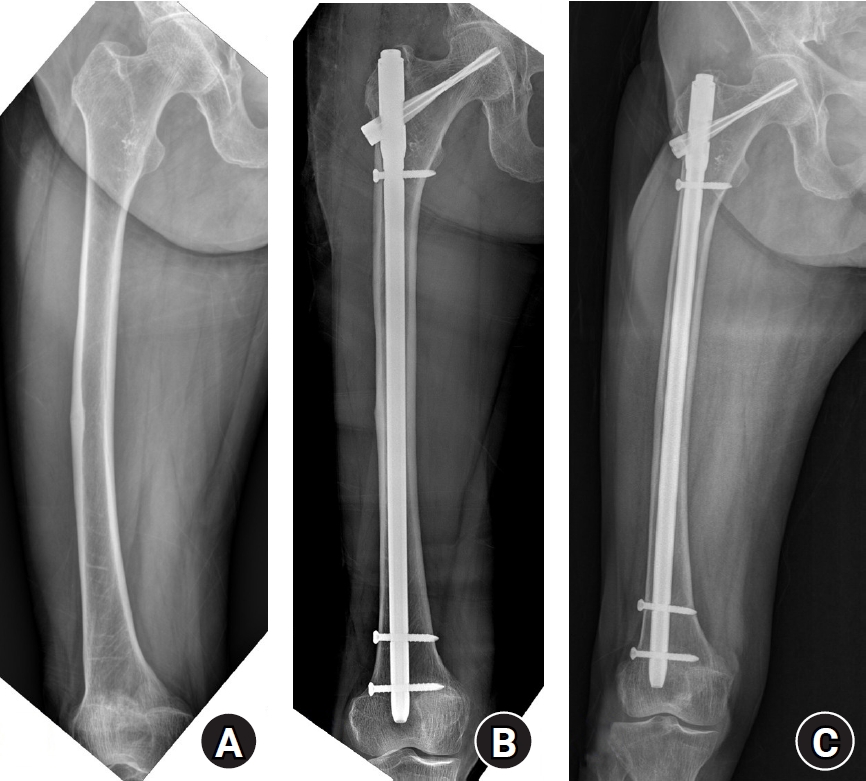
Initial presentation and prophylactic fixation in 2016. (A) Anteroposterior radiograph showing lateral cortical thickening with a transverse radiolucent line. (B) Postoperative radiograph after prophylactic intramedullary nailing. (C) Five-year follow-up radiograph obtained in 2021 showing complete healing with normal bone contour.
Fig. 2.
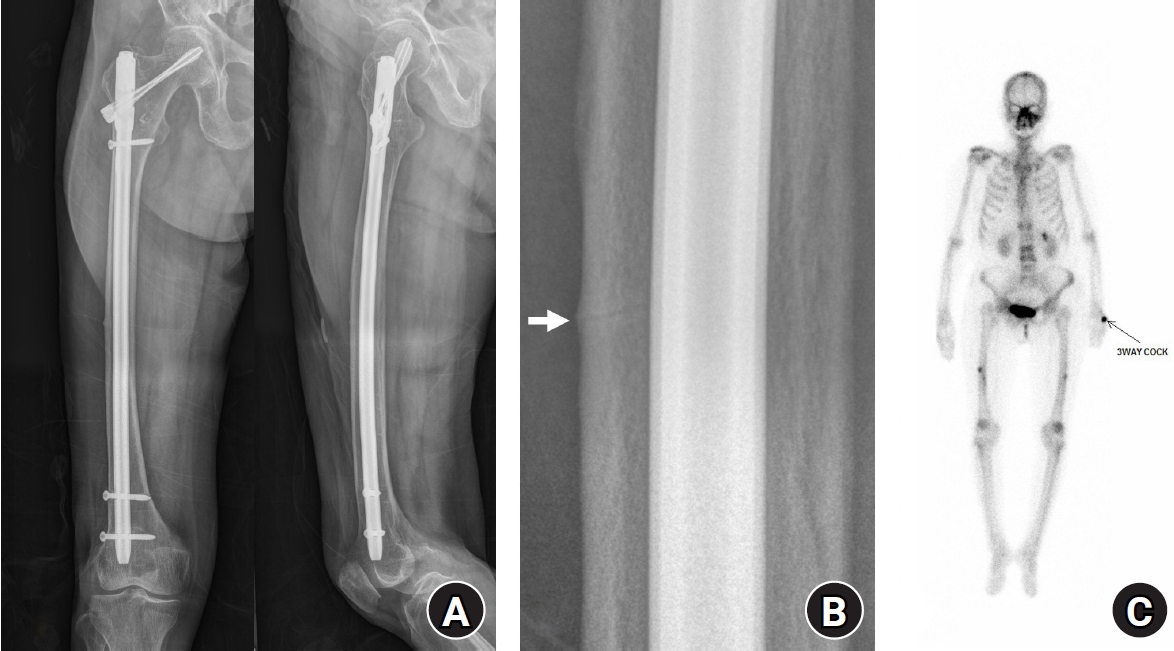
Recurrent incomplete atypical femoral fracture in 2024. (A) Anteroposterior and lateral radiographs showing recurrent lateral cortical thickening with intact hardware. (B) Magnified lateral radiograph showing a transverse fracture line at the same site (arrow). (C) Bone scintigraphy showing intense uptake at the fracture site and mild uptake in the contralateral femur.
Fig. 3.
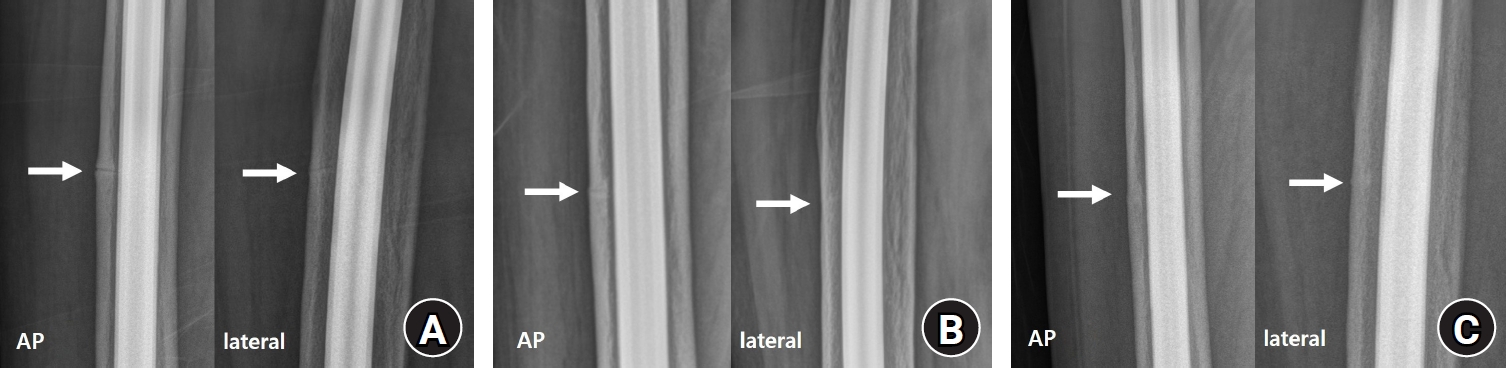
Magnified anteroposterior (AP) and lateral radiographs obtained 2, 4, and 5 months after teriparatide initiation. (A) Increased visibility of the fracture line at 2 months. (B) Progressive resolution at 4 months. (C) Complete healing at 5 months. White arrows indicate the fracture line or its corresponding site during the healing process.
Table 1.
Timeline of antiresorptive therapy, teriparatide treatment, and clinical events
- 1. Shane E, Burr D, Abrahamsen B, et al. Atypical subtrochanteric and diaphyseal femoral fractures: second report of a task force of the American Society for Bone and Mineral Research. J Bone Miner Res 2014;29:1-23.PubMed
- 2. Shane E, Burr D, Ebeling PR, et al. Atypical subtrochanteric and diaphyseal femoral fractures: report of a task force of the American Society for Bone and Mineral Research. J Bone Miner Res 2010;25:2267-94.PubMed
- 3. Oh CW, Oh JK, Park KC, Kim JW, Yoon YC. Prophylactic nailing of incomplete atypical femoral fractures. ScientificWorldJournal 2013;2013:450148.ArticlePubMedPMCPDF
- 4. Im GI, Lee SH. Effect of teriparatide on healing of atypical femoral fractures: a systemic review. J Bone Metab 2015;22:183-9.ArticlePubMedPMC
- 5. Chiang CY, Zebaze RM, Ghasem-Zadeh A, Iuliano-Burns S, Hardidge A, Seeman E. Teriparatide improves bone quality and healing of atypical femoral fractures associated with bisphosphonate therapy. Bone 2013;52:360-5.ArticlePubMed
- 6. Miyakoshi N, Aizawa T, Sasaki S, et al. Healing of bisphosphonate-associated atypical femoral fractures in patients with osteoporosis: a comparison between treatment with and without teriparatide. J Bone Miner Metab 2015;33:553-9.ArticlePubMedPDF
- 7. Byun SE, Lee KJ, Shin WC, Moon NH, Kim CH. The effect of teriparatide on fracture healing after atypical femoral fracture: a systematic review and meta-analysis. Osteoporos Int 2023;34:1323-34.ArticlePubMedPDF
- 8. Probyn L, Cheung AM, Lang C, et al. Bilateral atypical femoral fractures: how much symmetry is there on imaging? Skeletal Radiol 2015;44:1579-84.ArticlePubMedPDF
- 9. Schemitsch CE, Kuzyk P, McKee MD. Atypical femoral fracture despite prophylactic intramedullary nailing: a case report. JBJS Case Connect 2015;5:e57. PubMed
- 10. Fang C, Chau JY, Woo SB, Lau TW, Kwan K, Leung F. Propagation of bisphosphonate-related femoral stress fractures despite femoral nailing: a cautionary tale from 2 cases. Geriatr Orthop Surg Rehabil 2014;5:14-7.ArticlePubMedPMCPDF
- 11. Ahn J, Kim CH, Kim JW. Comparison of bone turnover suppression in atypical femoral fractures and osteoporotic hip fractures. Sci Rep 2024;14:19974.ArticlePubMedPMCPDF
References
Figure & Data
REFERENCES
Citations
Citations to this article as recorded by 
 ePub Link
 Cite
Cite XML Download
Same-site recurrence of an incomplete atypical femoral fracture 8 years after prophylactic intramedullary nailing following bisphosphonate re-exposure in an 81-year-old woman in Korea: a case report
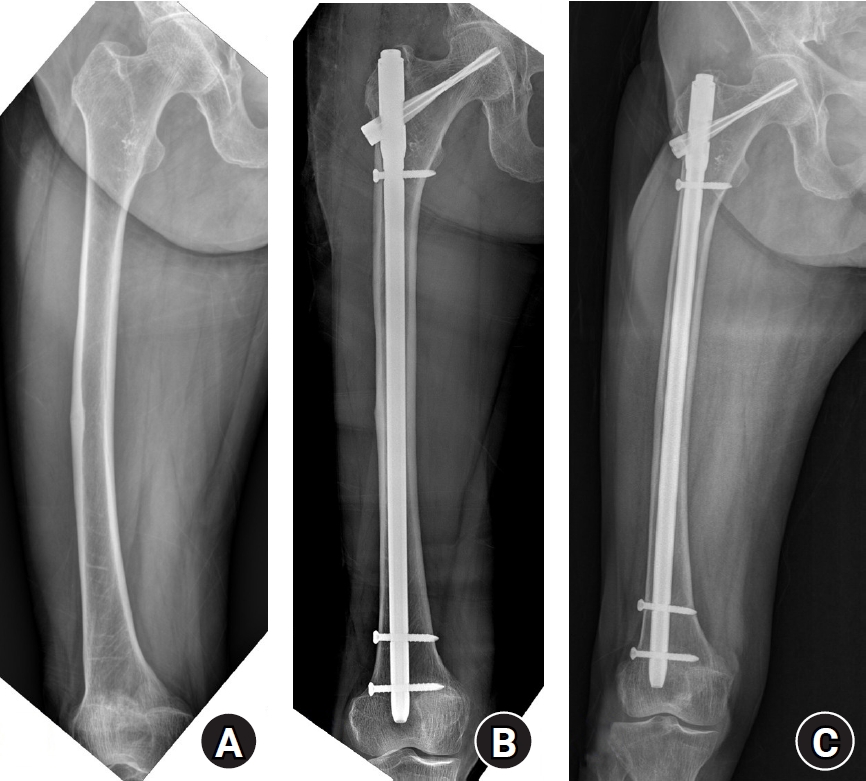
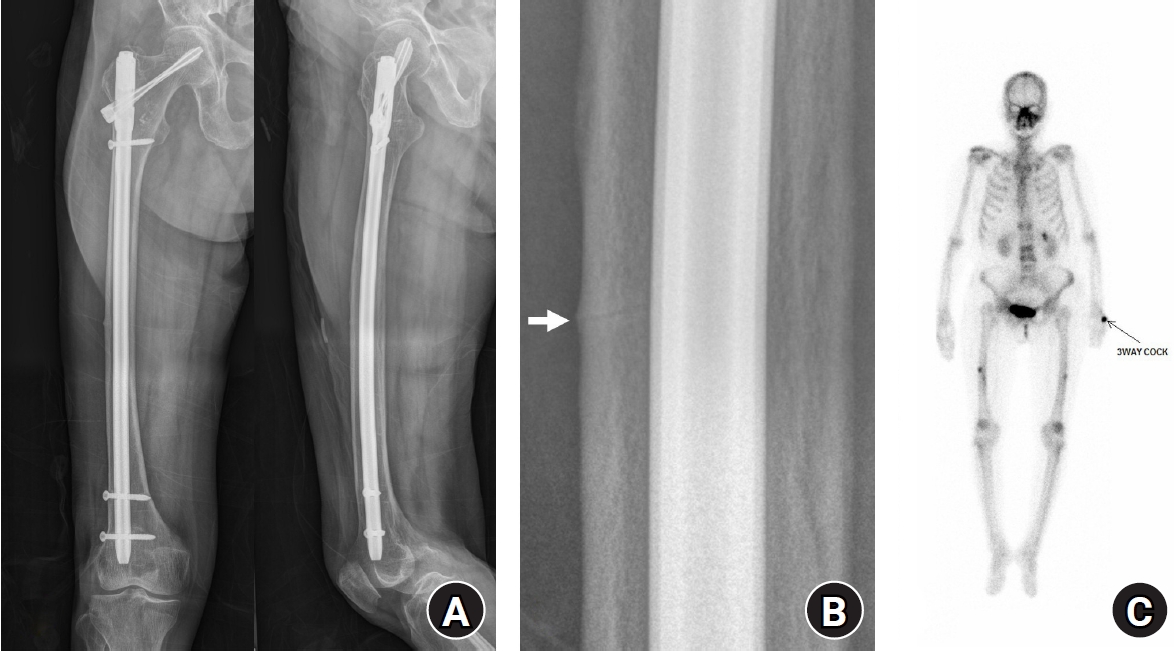
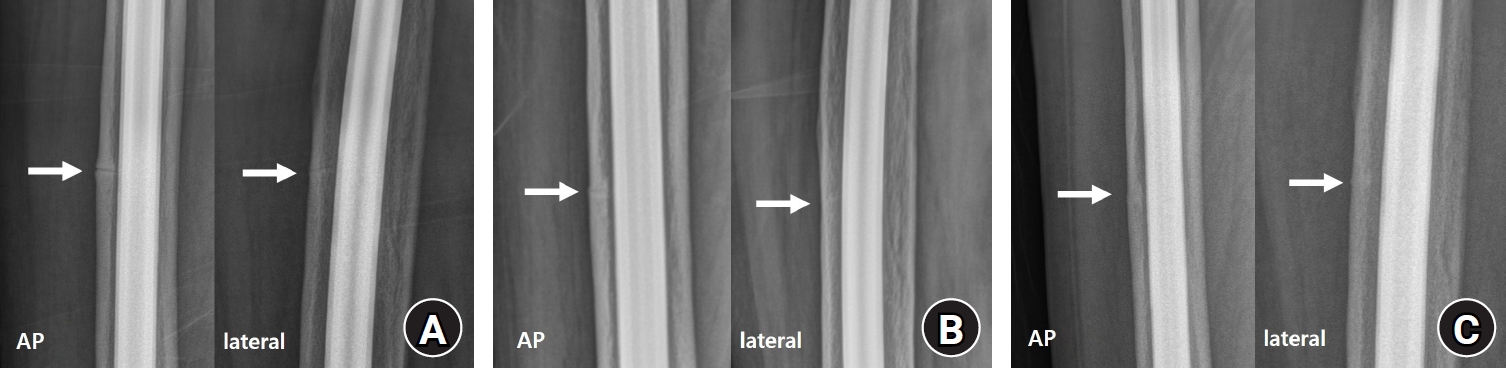
Fig. 1. Initial presentation and prophylactic fixation in 2016. (A) Anteroposterior radiograph showing lateral cortical thickening with a transverse radiolucent line. (B) Postoperative radiograph after prophylactic intramedullary nailing. (C) Five-year follow-up radiograph obtained in 2021 showing complete healing with normal bone contour.
Fig. 2. Recurrent incomplete atypical femoral fracture in 2024. (A) Anteroposterior and lateral radiographs showing recurrent lateral cortical thickening with intact hardware. (B) Magnified lateral radiograph showing a transverse fracture line at the same site (arrow). (C) Bone scintigraphy showing intense uptake at the fracture site and mild uptake in the contralateral femur.
Fig. 3. Magnified anteroposterior (AP) and lateral radiographs obtained 2, 4, and 5 months after teriparatide initiation. (A) Increased visibility of the fracture line at 2 months. (B) Progressive resolution at 4 months. (C) Complete healing at 5 months. White arrows indicate the fracture line or its corresponding site during the healing process.
Fig. 1.
Fig. 2.
Fig. 3.
Same-site recurrence of an incomplete atypical femoral fracture 8 years after prophylactic intramedullary nailing following bisphosphonate re-exposure in an 81-year-old woman in Korea: a case report
| Period | Antiresorptive or anabolic therapy | Clinical and radiographic events |
|---|---|---|
| 2000–2010 | Oral alendronate, daily (approximately 10 yr) | Treatment for postmenopausal osteoporosis |
| 2010–2015 | None (drug holiday, approximately 5 yr) | - |
| 2015–early 2016 | Intravenous ibandronate 3 mg every 3 mo (three injections) | - |
| February 2016 | Bisphosphonate discontinued | Index incomplete AFF of the right femur; prophylactic intramedullary nailing |
| February 2016–May 2020 | None (antiresorptive-free interval, approximately 4 yr) | - |
| May 2020 | Single infusion of zoledronic acid | Fall with new L2 vertebral compression fracture; multiple preexisting vertebral compression fractures on magnetic resonance imaging |
| 2021 | Intravenous ibandronate 3 mg every 3 mo resumed | Follow-up radiograph showed complete radiographic remodeling of the previous AFF site |
| 2021–2024 | Intravenous ibandronate continued | - |
| April 2024 | All antiresorptive agents discontinued; teriparatide 20 µg subcutaneously once daily started | Recurrent incomplete AFF at the same site; β-CTX 0.048 ng/mL, osteocalcin 6.36 ng/mL |
| April–July 2024 | Teriparatide for 4 mo, with calcium and vitamin D supplementation | Substantial radiographic improvement at 4 mo; patient declined further therapy |
| September 2024 | None | Complete radiographic healing at 5-mo follow-up; pain-free independent ambulation |
Table 1. Timeline of antiresorptive therapy, teriparatide treatment, and clinical events
AFF, atypical femoral fracture; β-CTX, β-isomerized C-terminal telopeptide of type I collagen.


