
 E-submission
 KOTA
KOTA TOTA
TOTA TOTS
TOTS
Articles
- Page Path
- HOME > J Musculoskelet Trauma > Volume 39(4); 2026 > Article
-
Case Report
- Progressive forearm instability after anatomical union of a radial head fracture: a case report of a challenging Essex-Lopresti injury
-
SeongJu Choi

-
Journal of Musculoskeletal Trauma 2026;39(4):374-381.
DOI: https://doi.org/10.12671/jmt.2026.00157
Published online: July 13, 2026
Department of Orthopedic Surgery, Nowon Eulji Medical Center, Eulji University School of Medicine, Seoul, Korea
- Correspondence to: SeongJu Choi Department of Orthopedic Surgery, Nowon Eulji Medical Center, Eulji University School of Medicine, 68 Hangeulbiseok-ro, Nowon-gu, Seoul 01830, Korea Tel: +82-2-970-8036 Email: seeds1617@gmail.com
• Received: April 6, 2026 • Revised: May 18, 2026 • Accepted: May 26, 2026
© 2026 The Korean Orthopaedic Trauma Association
This is an Open Access article distributed under the terms of the Creative Commons Attribution Non-Commercial License (http://creativecommons.org/licenses/by-nc/4.0/) which permits unrestricted noncommercial use, distribution, and reproduction in any medium, provided the original work is properly cited.
- 533 Views
- 8 Download


Abstract
-
Essex-Lopresti injuries remain challenging because anatomical restoration of bony structures does not always re-establish functional forearm stability. We report the case of a 51-year-old male patient who sustained an elbow dislocation, comminuted radial head and neck fracture, and distal radioulnar joint (DRUJ) dissociation after falling from a bicycle. He underwent open reduction and internal fixation of the radial head, interosseous membrane augmentation using a suture-button construct, and temporary DRUJ pinning. Immediate postoperative radiographs showed apparent restoration of radial length, and radiographic union of the radial head was achieved. However, ulnar-sided wrist pain initially improved but progressively recurred by 6 months, with increasing ulnar-positive variance and DRUJ widening. Elbow motion was preserved, but forearm rotation was limited, and computed tomography demonstrated heterotopic ossification around the radial head. Ulnar shortening osteotomy and radial head arthrolysis were performed as a second procedure, after which mechanical instability developed, with irreducible anterior dislocation of the radial head. A third operation, consisting of annular ligament reconstruction using a palmaris longus autograft, restored proximal radioulnar joint stability, although substantial limitation of forearm rotation persisted. This case highlights that even radiographic union and multistructural initial management may fail to restore balanced forearm mechanics in Essex-Lopresti injury.
-
Level of evidence V.
Introduction
Essex-Lopresti injury is an uncommon but potentially devastating form of longitudinal forearm instability that is frequently underestimated when a radial head fracture is treated as an isolated injury [1,2]. Delayed recognition or incomplete restoration of the injured stabilizers may lead to proximal migration of the radius, distal radioulnar joint (DRUJ) dysfunction, ulnocarpal impaction, pain, and loss of forearm rotation [1-3].
Management of Essex-Lopresti injury therefore requires more than fracture fixation alone. The forearm should be regarded as a single biomechanical unit consisting of the proximal radioulnar joint, the interosseous membrane, and the DRUJ [2,4,5]. Classic biomechanical studies have shown that the radial head is the primary osseous restraint to proximal radial migration, whereas the interosseous membrane, particularly the central band (CB), and the distal radioulnar soft tissues are essential stabilizers for longitudinal load transfer and forearm balance [4,5]. Nevertheless, optimal management remains controversial, especially in cases that progress despite apparently satisfactory restoration of bony anatomy, and no universally accepted treatment algorithm exists for chronic lesions [3,6]. We present a case of progressive forearm instability after anatomical union of a radial head fracture to highlight that restoration of radial length and fracture union do not necessarily re-establish balanced forearm mechanics in Essex-Lopresti injury.
Case report
Written informed consent for publication of the clinical details and accompanying images was obtained from the patient.
A 51-year-old male patient sustained an injury to his left forearm after falling from a bicycle. At initial presentation, he had diffuse tenderness along the forearm, wrist deformity, and tenderness over the DRUJ. Radiographs demonstrated an elbow dislocation, a comminuted radial head and neck fracture, and DRUJ dissociation; consequently, an Essex-Lopresti injury was diagnosed (Fig. 1). He had no relevant past medical or surgical history. Initial surgical treatment consisted of plate fixation of the radial head. Because a metaphyseal defect remained after reduction, autologous iliac bone graft was added. Arthroscopy demonstrated complete triangular fibrocartilage complex (TFCC) disruption involving both the foveal and capsular attachments, and arthroscopic transosseous repair was performed. No degenerative disc tear or ulnocarpal chondral lesion was identified arthroscopically. Interosseous membrane augmentation using a TightRope (Arthrex) construct was then performed according to a previously described technique, with the radial and ulnar tunnel entry and exit points placed along the expected CB trajectory and the forearm held in slight supination during tensioning, followed by temporary DRUJ pinning with a single 1.2-mm K-wire (Fig. 2) [7].
The rehabilitation protocol and a concise timeline of the clinical course are provided in Table 1. Radiographic union of the radial head was achieved after the index procedure, and restoration of radial length was confirmed. However, 6 months after surgery, the patient returned with recurrent ulnar-sided wrist pain and limitation of forearm rotation. Elbow flexion and extension were full, and wrist flexion and extension were preserved. Forearm rotation was limited to 70° of supination and 25° of pronation. Tenderness was present at the distal ulnar button site and the ulnocarpal joint.
Follow-up radiographs at 6 months demonstrated qualitatively increasing ulnar-positive variance and DRUJ widening compared with immediate postoperative radiographs, consistent with recurrent forearm imbalance and secondary ulnar impaction syndrome. Calibrated serial measurements of ulnar variance and proximal radial migration were not available; therefore, radiographic progression was assessed qualitatively. Computed tomography revealed heterotopic ossification around the radial head (Fig. 3). Because symptoms recurred despite osseous union and restoration of radial length, a second operation was planned.
A second operation was performed to address persistent wrist pain and limited forearm rotation. The procedure consisted of proximal arthrolysis around the radial head, diaphyseal ulnar shortening osteotomy (USO) at the midshaft level, and removal of the TightRope device because of tenderness at the distal ulnar button site and suspected implant irritation. During the second operation, the heterotopic ossification was not found to be the main mechanical cause of rotational limitation. Immediate postoperative elbow and forearm motions were full (Fig. 4).
Although wrist pain improved after the second operation, the patient developed a new clunking sensation within 3 weeks. Imaging demonstrated irreducible anterior dislocation of the radial head, indicating local proximal radioulnar joint instability. A third operation was therefore planned immediately and performed 4 weeks after the second operation. Annular ligament reconstruction using a palmaris longus autograft was performed to restore proximal stability (Fig. 5). At 1 year after the third operation, the patient reported mild residual pain with a numeric rating scale score of 1 to 2. Elbow motion was 135° of flexion and 0° of extension, forearm rotation was 55° of supination and 30° of pronation, and wrist motion was 60° of flexion and 70° of extension. Ulnar-sided wrist pain had substantially improved. Radiographs demonstrated maintained reduction of the radial head without recurrent dislocation, and the patient reported no recurrent clunking sensation or subjective instability. Thus, proximal radioulnar stability and ulnar-sided wrist pain improved, whereas substantial limitation of forearm rotation persisted.
Discussion
Essex-Lopresti injury represents failure of the forearm as a biomechanical unit rather than an isolated injury of a single joint or ligament [1,2,4,5]. The present case illustrates a practical limitation in postoperative assessment: radiographic union of the radial head and apparent restoration of radial length after the index procedure did not ensure durable forearm balance. Ulnar-positive variance in this setting may reflect not only osseous radial shortening but also DRUJ alignment, forearm position during radiography, and abnormal longitudinal load transfer across the forearm. Therefore, radial head union alone should not be interpreted as evidence that longitudinal forearm stability has been restored.
A more compelling question raised by this case is why progressive instability developed despite multistructural initial management, including fixation of the radial head, temporary DRUJ pinning, arthroscopic TFCC repair, and suture-button augmentation of the interosseous membrane. One possible explanation is the uncertain role of suture-button augmentation itself. Clinical evidence supporting acute suture-button augmentation in Essex-Lopresti injury remains sparse, limited mainly to a case report in the acute setting and a small retrospective series in chronic instability [7,8]. Although these reports suggest that the technique may be feasible, they do not establish a standard reconstructive strategy [7,8]. In addition, the native CB is a broad ligamentous structure, and reproducing its rotational behavior with a focal suture-button construct remains challenging. Kholinne et al. [9] showed that the CB maintains relatively constant strain during forearm rotation and suggested that graft tensioning angle may influence reconstruction behavior. Therefore, construct-related technical factors, including nonstandardized graft orientation or tensioning, may have contributed in the present case.
Another possible contributor is that the temporary 1.2-mm DRUJ pin fixation itself may not have provided sufficiently rigid radioulnar stabilization. In this case, wrist and elbow flexion-extension motion was started at 6 weeks postoperatively, with active forearm rotation planned after pin removal at 8 weeks; however, pin breakage was noted at 7 weeks. This finding may be interpreted only as a possible marker of mechanical stress across the DRUJ, rather than direct evidence of construct failure or persistent longitudinal instability. Although the exact cause cannot be determined, this case suggests that failure may occur despite anatomically successful initial treatment and multistructural soft-tissue management.
Importantly, unlike instability in a single joint, chronic longitudinal forearm instability may present with pain, weakness, and limited forearm rotation rather than excessive motion [1-3]. Therefore, the restricted rotation in this case may itself have been a symptom of persistent forearm instability, not simply a mechanical block around the proximal radius. Retrospectively, the increasing ulnar-positive variance and DRUJ widening before the second operation may also have represented persistent longitudinal forearm imbalance, and this possibility should have been considered before performing isolated balancing or release procedures.
This distinction is important because heterotopic ossification around the radial head was not found to be the main mechanical cause of rotational limitation at surgery. Therefore, simple release of the proximal radioulnar region could not be expected to solve the underlying problem. Instead, proximal arthrolysis, implant removal, and USO may have altered the balance of the forearm unit, although the individual contribution of each procedure cannot be determined in a single case. The subsequent irreducible anterior radial head dislocation may have reflected persistent longitudinal forearm imbalance, pre-existing proximal soft-tissue injury, iatrogenic destabilization during arthrolysis, or a combination of these factors. These possibilities are consistent with the concept that the forearm must be managed as an integrated unit rather than as separate joints. USO can still be useful in this setting, particularly when distal ulnar-sided wrist pain, positive ulnar variance, and secondary ulnocarpal impaction are the dominant complaints [6,10]. However, USO does not anatomically reconstruct the CB and therefore should be understood primarily as a balancing procedure rather than a definitive solution to persistent longitudinal instability. It may reduce distal symptoms, but it does not directly correct the underlying CB insufficiency. In addition, excessive reliance on ulnar shortening alone may theoretically alter load distribution across the proximal forearm and radiocapitellar articulation. For example, ulnar shortening performed proximal to the functional CB complex may have further reduced effective tension within the residual interosseous stabilizers.
Current strategies for interosseous membrane reconstruction remain diverse and incompletely validated. Various methods, including tendon graft reconstruction and suture-button–based techniques, have been described, yet no single technique has gained universal acceptance [6,8,9]. This likely reflects not only the rarity of symptomatic chronic CB insufficiency, but also the fact that available procedures are invasive and biomechanically imperfect surrogates for a complex native structure. Thus, when incomplete healing of the interosseous membrane is suspected after acute treatment, the indication, timing, and method of CB reconstruction remain unresolved issues.
In the absence of high-level evidence, the author’s interpretation is that the choice between USO and interosseous membrane reconstruction should be guided by the dominant clinical problem. When distal ulnar-sided wrist pain, positive ulnar variance, and secondary ulnocarpal impaction are the main findings without obvious signs of persistent instability or progressive radiographic imbalance, USO may be considered as a simpler salvage or balancing procedure [6,10]. In contrast, when persistent forearm instability is suggested by proximal symptoms such as elbow pain, functional weakness, painful clunking, or clear radioulnar dissociation, CB reconstruction may be the more rational consideration. This distinction is not evidence-based, but may provide a practical framework for decision-making in difficult cases.
This case has several practical implications. Even after multistructural initial management, balanced forearm mechanics may still fail to be restored in Essex-Lopresti injury. In the acute setting, a firm construct and sufficient postoperative protection may be more important than early rehabilitation, in addition to restoration of the bony stabilizers. When symptoms persist, the problem should be re-evaluated from the perspective of forearm biomechanics. USO helps balance dominant distal symptoms, whereas interosseous membrane reconstruction may be considered when persistent instability is strongly suspected.
The main strength of this report is that the serial operative course provided direct clinical insight into how each intervention may influence forearm balance over time. Its main limitation is that it is a single case without direct measurement of interosseous membrane healing, proximal soft-tissue integrity, or dynamic load transfer. Nevertheless, the case highlights a clinically important lesson: in Essex-Lopresti injury, radiographic fracture healing and apparent restoration of radial length may not be sufficient to ensure durable, balanced forearm mechanics.
-
Author contributions
All the work was done by SeongJu Choi.
-
Conflicts of interest
No potential conflict of interest relevant to this article was reported.
-
Funding
None.
-
Data availability
Not applicable.
-
Acknowledgments
None.
-
Supplementary materials
None.
Article Information
Fig. 1.
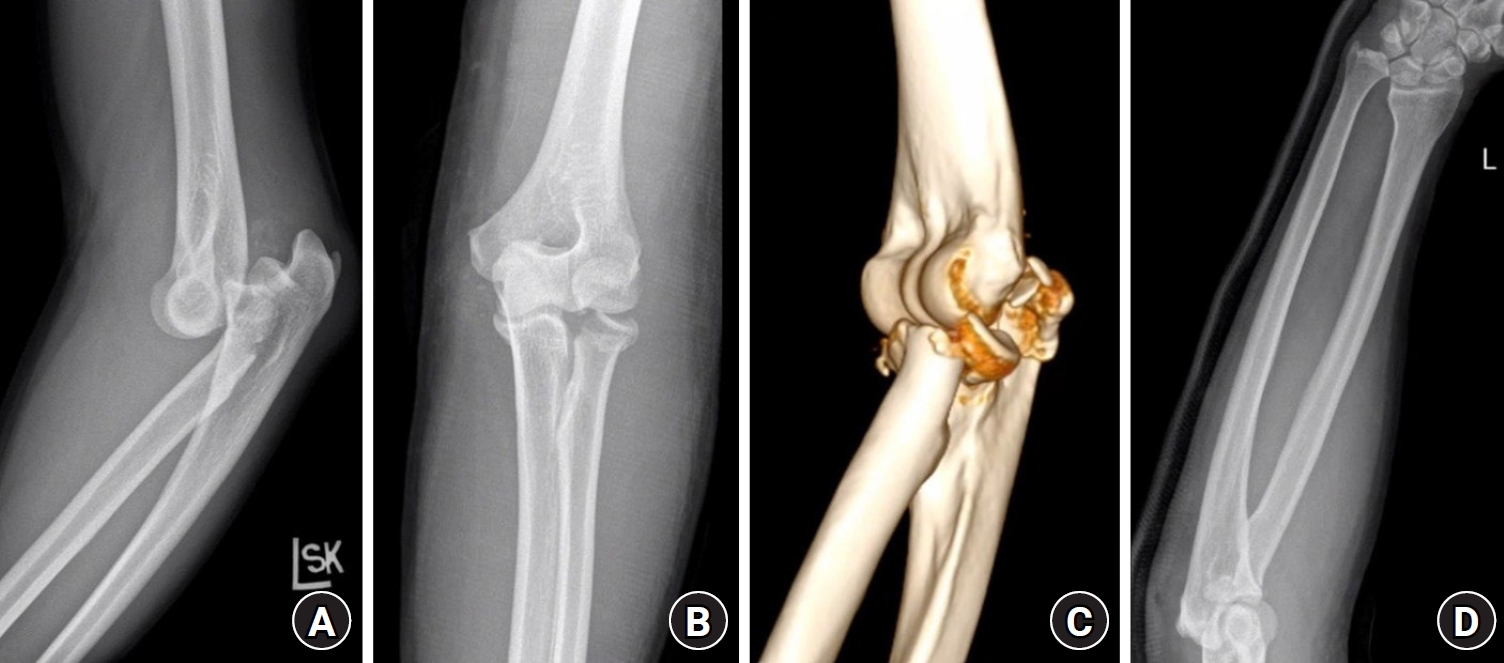
Initial radiographs confirming Essex-Lopresti injury. (A) Lateral and (B) anteroposterior radiographs of the elbow showing elbow dislocation with a comminuted radial head and neck fracture. (C) Three-dimensional computed tomography reconstruction demonstrating the radial head and neck fracture. (D) Forearm radiograph showing distal radioulnar joint dissociation.
Fig. 2.
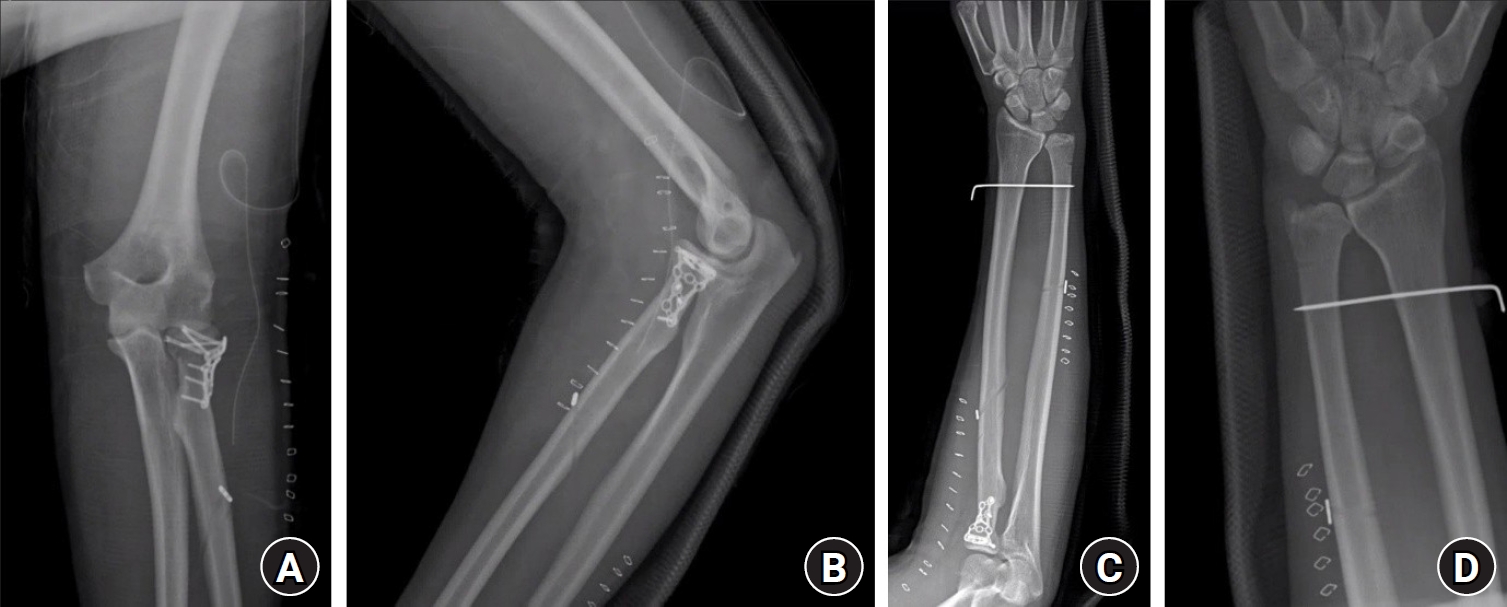
Postoperative radiographs showing restoration of radial length after the index operation. (A, B) Anteroposterior and lateral radiographs of the elbow showing radial head fixation. (C, D) Wrist radiographs showing temporary distal radioulnar joint pinning and apparent restoration of radial length after interosseous membrane suture-button augmentation.
Fig. 3.
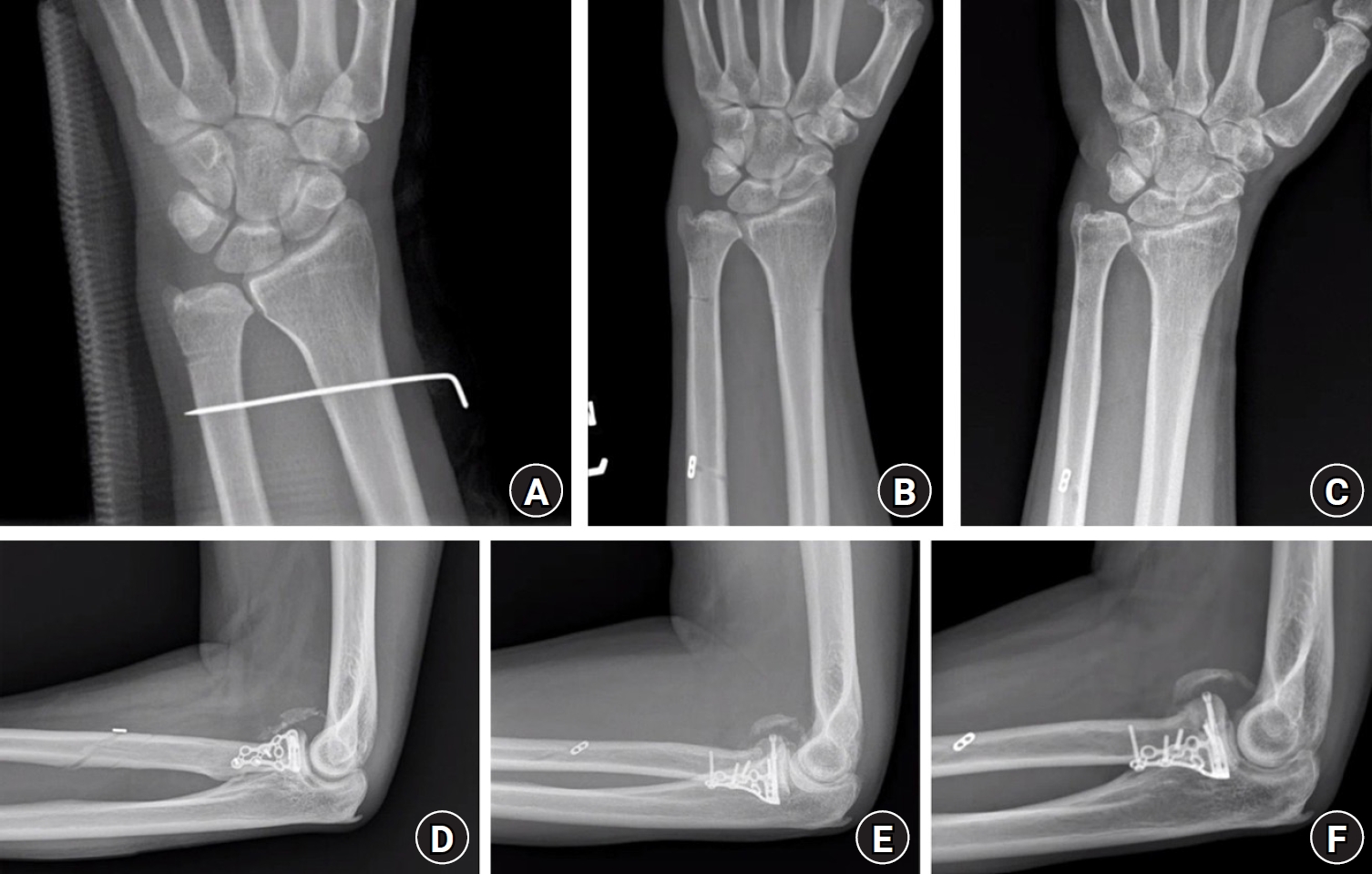
Follow-up imaging demonstrating secondary ulnar impaction syndrome at the wrist and heterotopic ossification around the elbow. (A‒C) Serial wrist radiographs showing qualitatively increased ulnar-positive variance and distal radioulnar joint widening. (D‒F) Elbow radiographs showing union and heterotopic ossification around the radial head.
Fig. 4.
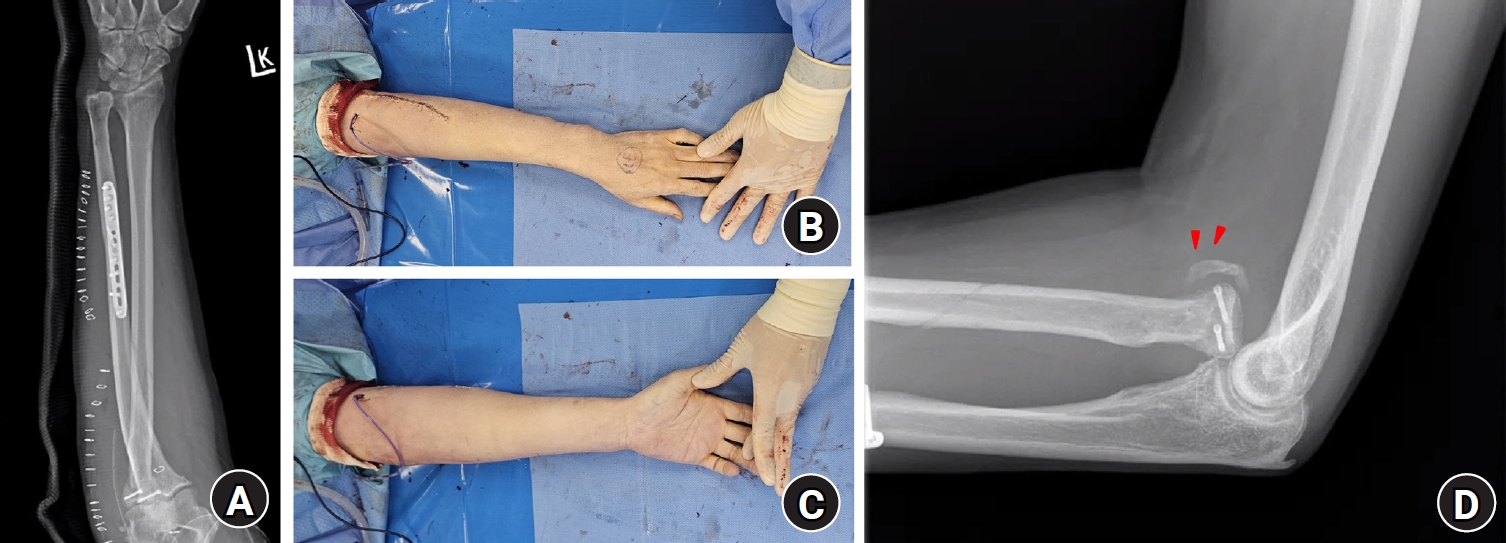
Intraoperative and postoperative findings after the second operation, including proximal arthrolysis and diaphyseal ulnar shortening osteotomy. (A) Postoperative forearm radiograph showing diaphyseal ulnar shortening osteotomy. (B, C) Intraoperative assessment after proximal arthrolysis showing improved passive forearm rotation. (D) Postoperative lateral elbow radiograph showing anterior dislocation of the radial head (arrowheads).
Fig. 5.
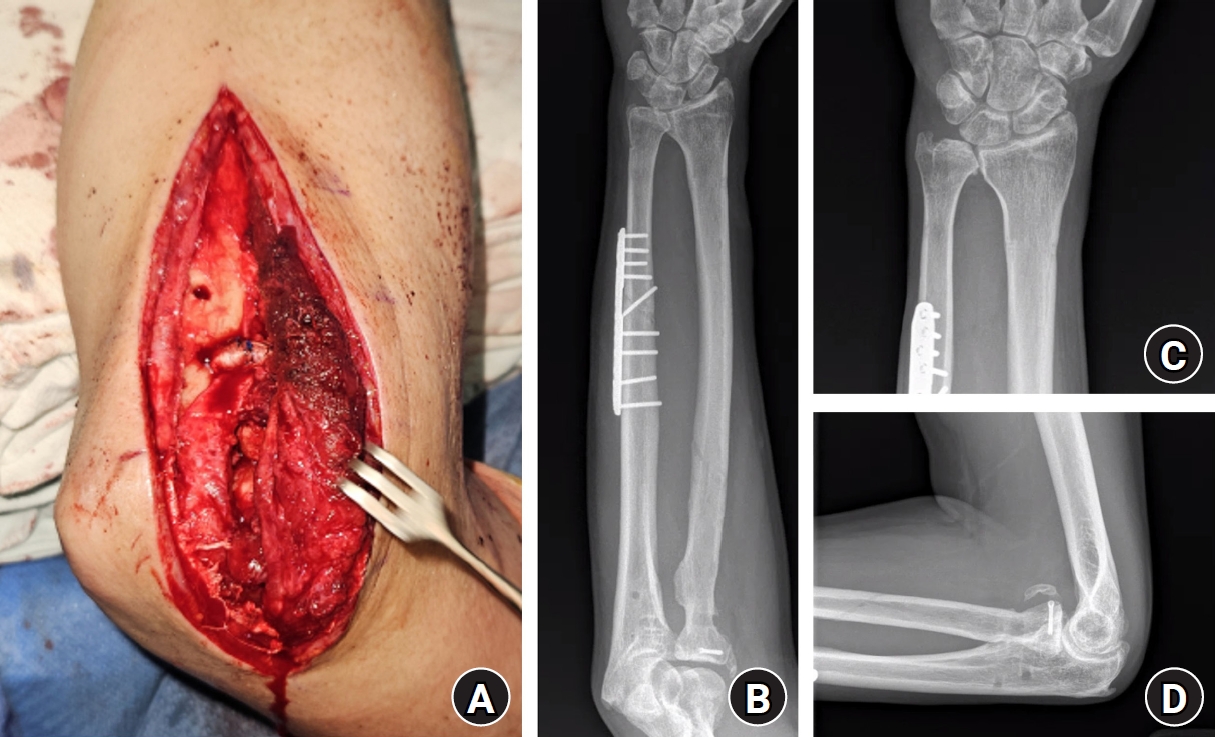
Findings after the third operation. (A) Intraoperative photograph showing annular ligament reconstruction using a palmaris longus autograft. (B–D) Postoperative radiographs confirming reduction of the radial head.
Table 1.
Timeline of the clinical course
- 1. Dodds SD, Yeh PC, Slade JF 3rd. Essex-Lopresti injuries. Hand Clin 2008;24:125-37.ArticlePubMed
- 2. Adams JE. Forearm instability: anatomy, biomechanics, and treatment options. J Hand Surg Am 2017;42:47-52.ArticlePubMed
- 3. Schnetzke M, Porschke F, Hoppe K, Studier-Fischer S, Gruetzner PA, Guehring T. Outcome of early and late diagnosed Essex-Lopresti injury. J Bone Joint Surg Am 2017;99:1043-50.ArticlePubMed
- 4. Hotchkiss RN, An KN, Sowa DT, Basta S, Weiland AJ. An anatomic and mechanical study of the interosseous membrane of the forearm: pathomechanics of proximal migration of the radius. J Hand Surg Am 1989;14:256-61.ArticlePubMed
- 5. Rabinowitz RS, Light TR, Havey RM, et al. The role of the interosseous membrane and triangular fibrocartilage complex in forearm stability. J Hand Surg Am 1994;19:385-93.ArticlePubMed
- 6. Artiaco S, Fusini F, Colzani G, Massè A, Battiston B. Chronic Essex-Lopresti injury: a systematic review of current treatment options. Int Orthop 2019;43:1413-20.ArticlePubMedPDF
- 7. Brin YS, Palmanovich E, Bivas A, et al. Treating acute Essex-Lopresti injury with the TightRope device: a case study. Tech Hand Up Extrem Surg 2014;18:51-5.ArticlePubMed
- 8. Gaspar MP, Kane PM, Pflug EM, Jacoby SM, Osterman AL, Culp RW. Interosseous membrane reconstruction with a suture-button construct for treatment of chronic forearm instability. J Shoulder Elbow Surg 2016;25:1491-500.ArticlePubMed
- 9. Kholinne E, Kwak JM, Sun Y, Koh KH, Jeon IH. The role of the interosseous ligament in forearm rotation: a biomechanical study. J Orthop Surg (Hong Kong) 2020;28:2309499020973481.ArticlePubMedPDF
- 10. Duckworth AD, Clement ND, Aitken SA, Ring D, McQueen MM. Essex-Lopresti lesion associated with an impacted radial neck fracture: interest of ulnar shortening in the secondary management of sequelae. J Shoulder Elbow Surg 2011;20:e19-24.Article
References
Figure & Data
REFERENCES
Citations
Citations to this article as recorded by 
 ePub Link
 Cite
Cite XML Download
Progressive forearm instability after anatomical union of a radial head fracture: a case report of a challenging Essex-Lopresti injury
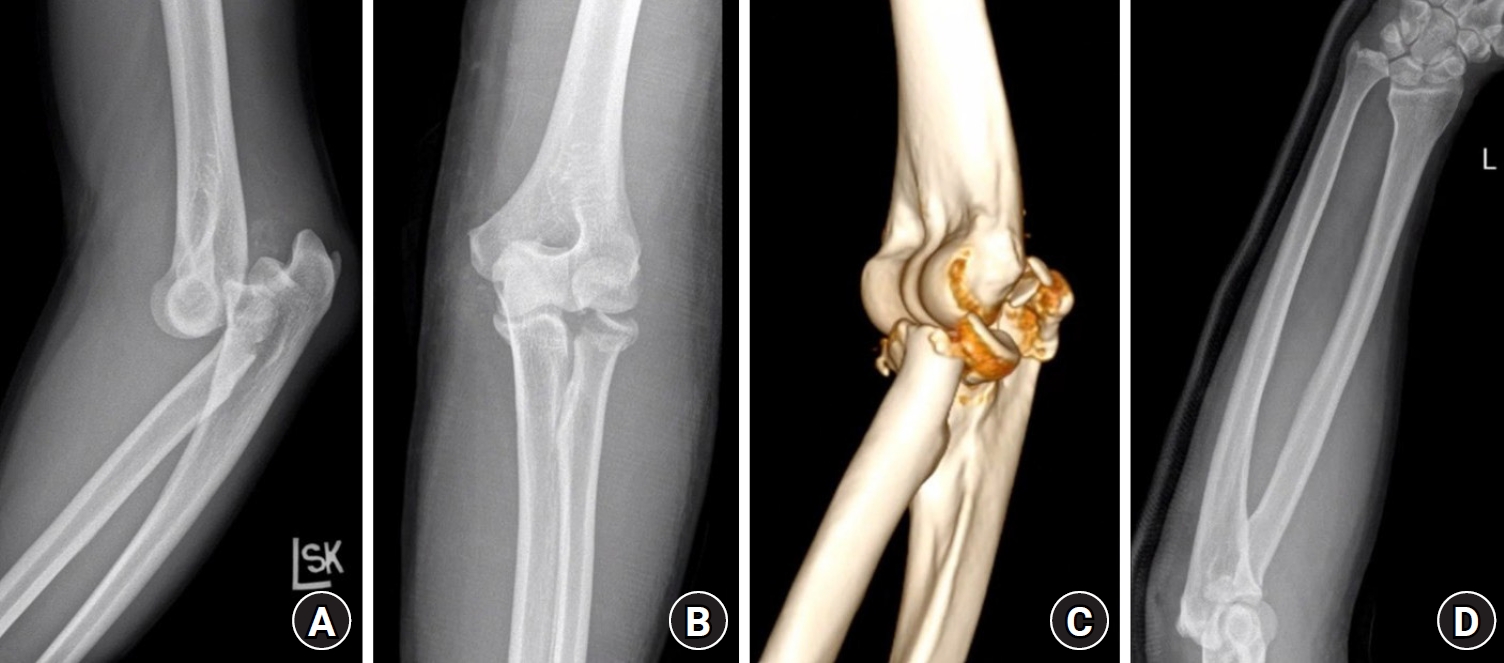
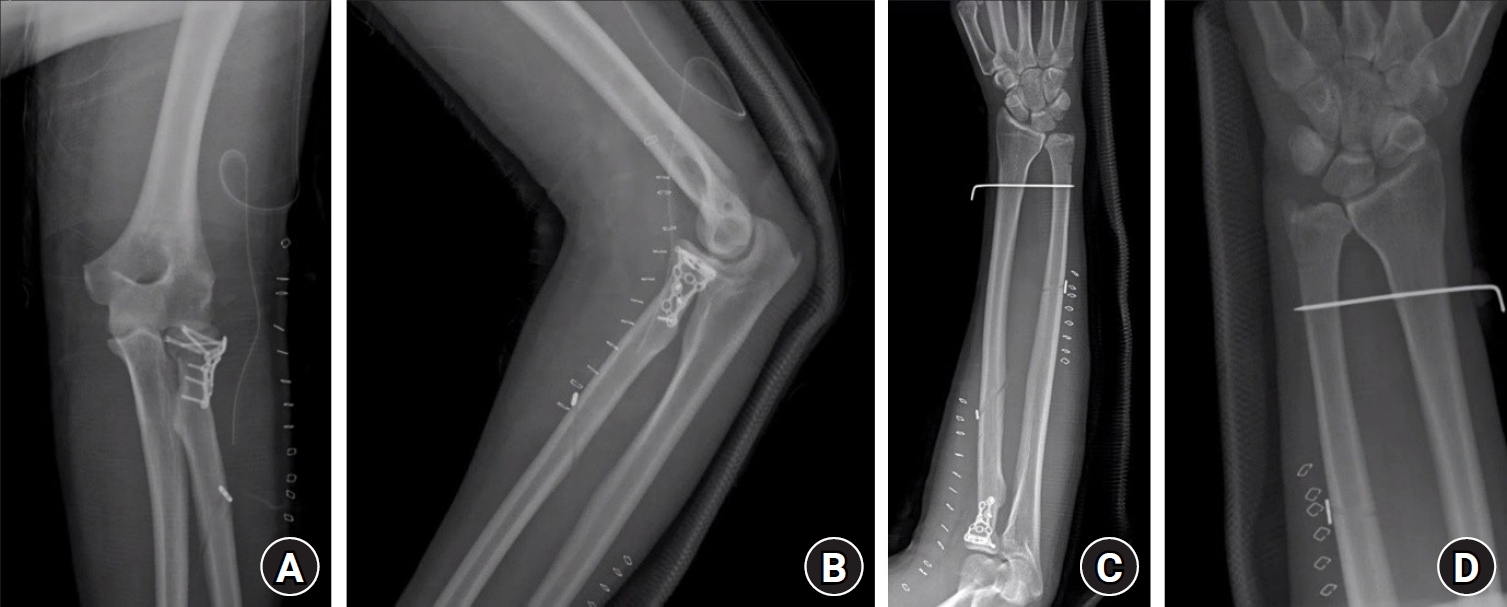
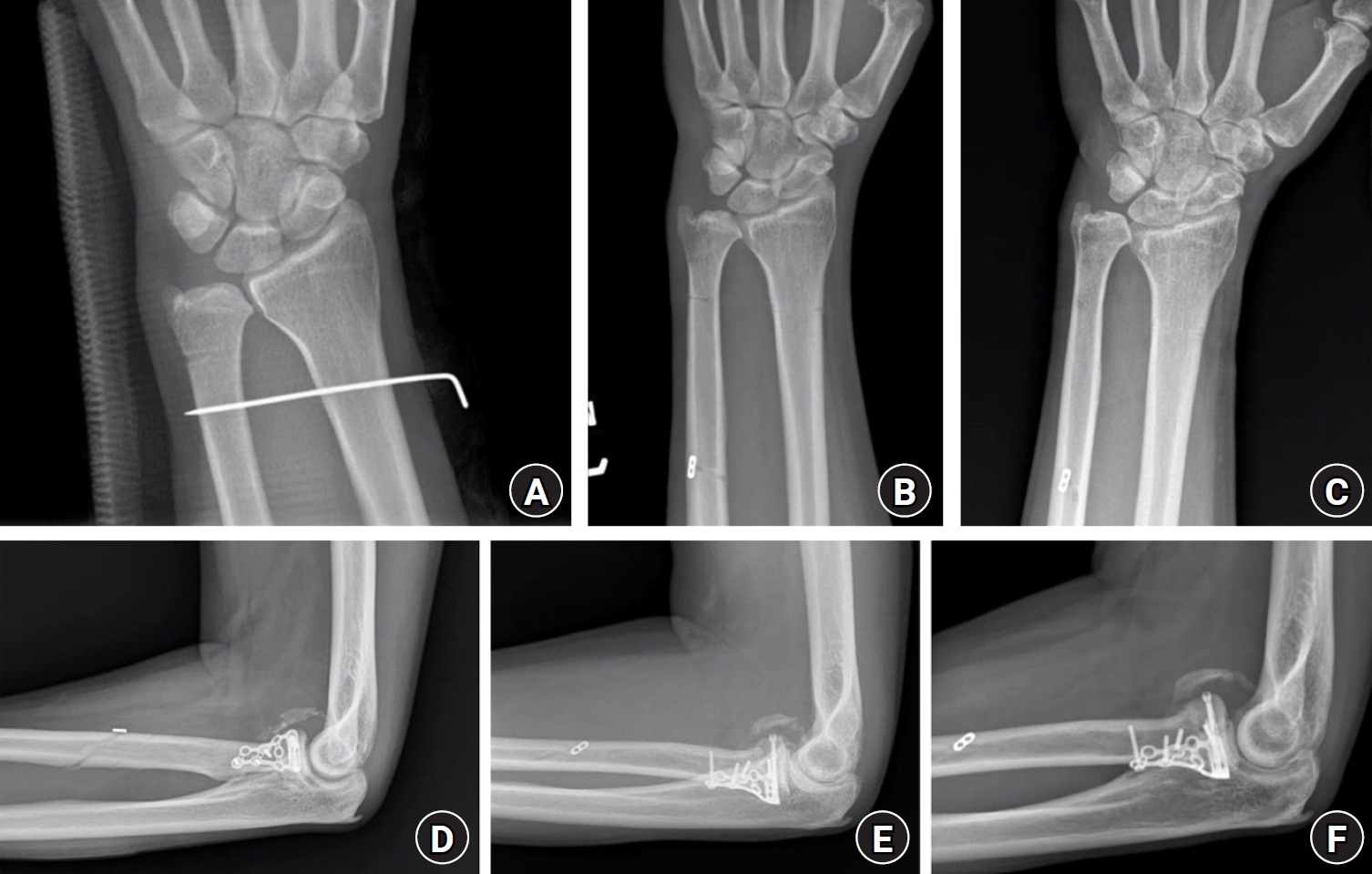
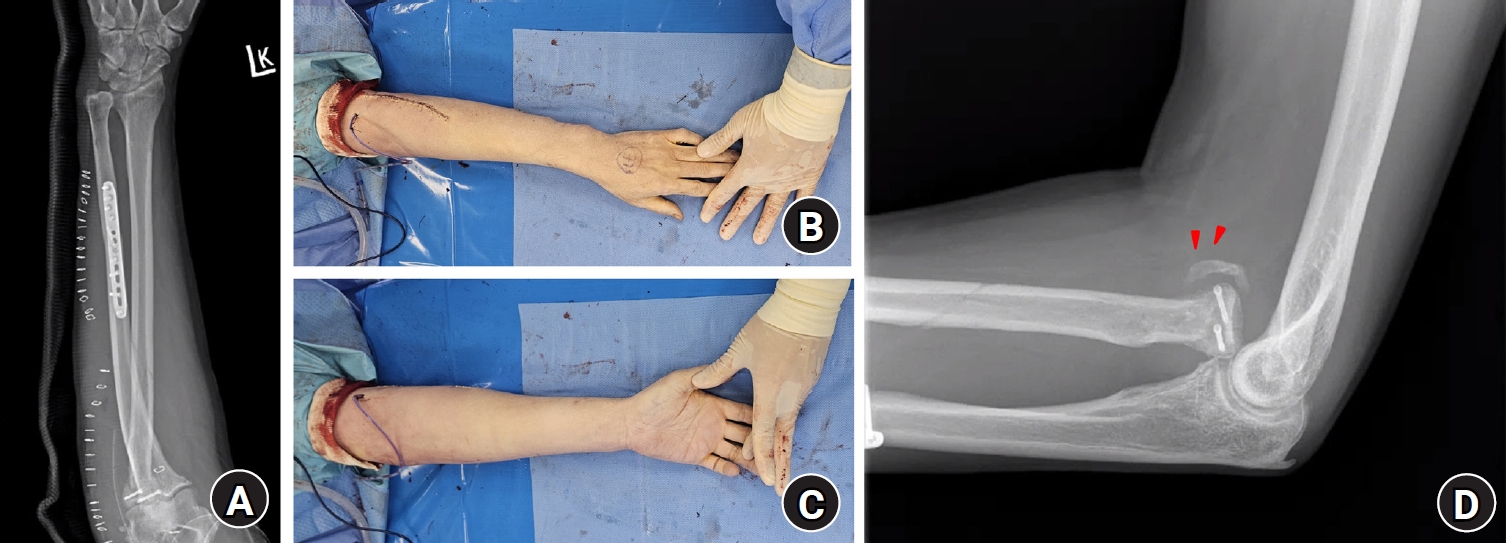
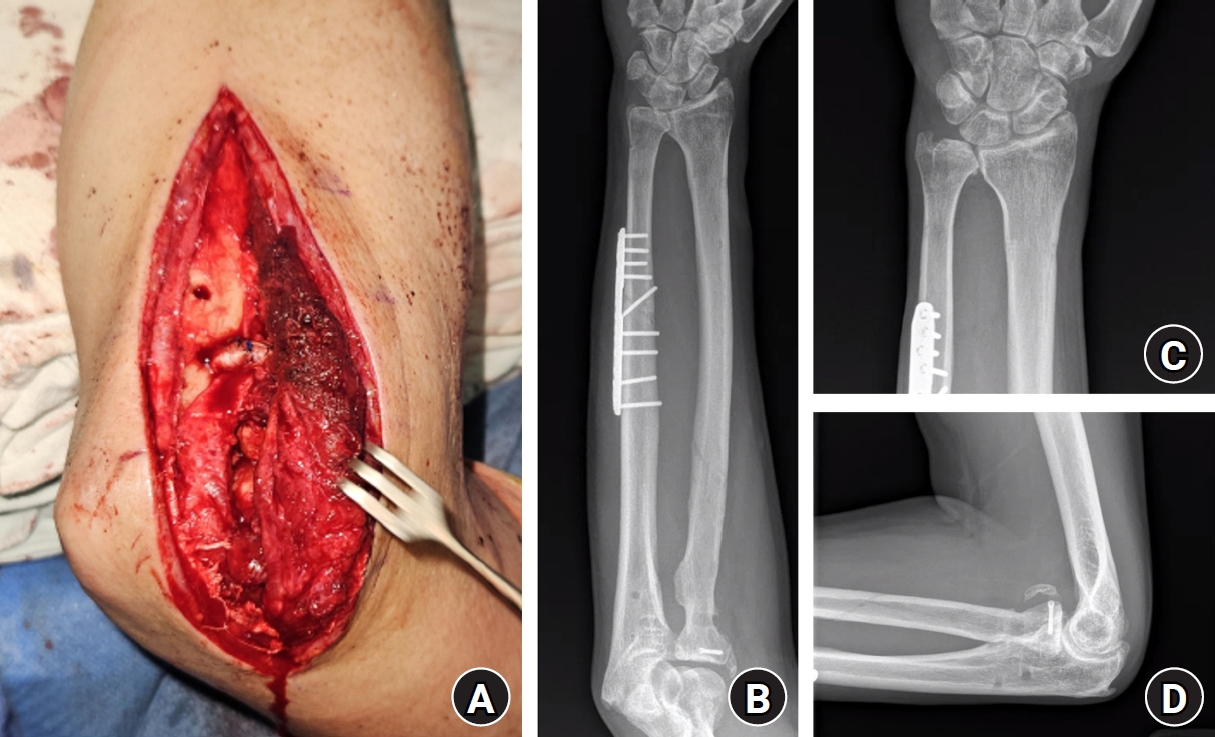
Fig. 1. Initial radiographs confirming Essex-Lopresti injury. (A) Lateral and (B) anteroposterior radiographs of the elbow showing elbow dislocation with a comminuted radial head and neck fracture. (C) Three-dimensional computed tomography reconstruction demonstrating the radial head and neck fracture. (D) Forearm radiograph showing distal radioulnar joint dissociation.
Fig. 2. Postoperative radiographs showing restoration of radial length after the index operation. (A, B) Anteroposterior and lateral radiographs of the elbow showing radial head fixation. (C, D) Wrist radiographs showing temporary distal radioulnar joint pinning and apparent restoration of radial length after interosseous membrane suture-button augmentation.
Fig. 3. Follow-up imaging demonstrating secondary ulnar impaction syndrome at the wrist and heterotopic ossification around the elbow. (A‒C) Serial wrist radiographs showing qualitatively increased ulnar-positive variance and distal radioulnar joint widening. (D‒F) Elbow radiographs showing union and heterotopic ossification around the radial head.
Fig. 4. Intraoperative and postoperative findings after the second operation, including proximal arthrolysis and diaphyseal ulnar shortening osteotomy. (A) Postoperative forearm radiograph showing diaphyseal ulnar shortening osteotomy. (B, C) Intraoperative assessment after proximal arthrolysis showing improved passive forearm rotation. (D) Postoperative lateral elbow radiograph showing anterior dislocation of the radial head (arrowheads).
Fig. 5. Findings after the third operation. (A) Intraoperative photograph showing annular ligament reconstruction using a palmaris longus autograft. (B–D) Postoperative radiographs confirming reduction of the radial head.
Fig. 1.
Fig. 2.
Fig. 3.
Fig. 4.
Fig. 5.
Progressive forearm instability after anatomical union of a radial head fracture: a case report of a challenging Essex-Lopresti injury
| Time | Clinical course |
|---|---|
| Initial injury | Bicycle fall; Essex-Lopresti injury diagnosed |
| Index surgery (1 day after injury) | Radial head open reduction and internal fixation with autologous iliac bone graft; arthroscopic transosseous repair of the triangular fibrocartilage complex; central band TightRope augmentation with radioulnar pinning using 1.2-mm K-wire |
| Rehabilitation (after index surgery) | • 3 Weeks: long arm cast maintained |
| • 6 Weeks: Munster cast removed. Velcro splint was applied, and wrist/elbow flexion-extension started | |
| • 7 Weeks: DRUJ pin breakage noted | |
| • 8 Weeks: pin removal; active forearm rotational ROM started | |
| 6 Months after index surgery | Ulnar-sided wrist pain with secondary ulnar impaction syndrome; limited forearm rotation |
| Second surgery | Proximal arthrolysis; diaphyseal ulnar shortening osteotomy; removal of the TightRope implant |
| 3 Weeks after second surgery | New clunking sensation around the elbow; irreducible anterior radial head dislocation confirmed at follow-up |
| Third surgery | Annular ligament reconstruction using a palmaris longus autograft |
| 1 Year after third surgery | Mild residual pain; maintained radial head reduction; improved ulnar-sided wrist pain; no recurrent clunking or subjective instability |
Table 1. Timeline of the clinical course
DRUJ, distal radioulnar joint; ROM, range of motion.


